
The alcohol-free category in hospitality has evolved rapidly over the last few years.
What was once treated as a niche or seasonal trend has now become a permanent part of consumer behaviour. Low and no alcohol drinks are no longer just associated with Dry January or temporary moderation goals. Instead, alcohol-free choices are increasingly shaping year-round drinking occasions across pubs, bars and restaurants.
According to the latest Raising the Bar 2026 report from KAM and Everleaf, hospitality operators have responded quickly to this growth in demand. Availability of alcohol-free products has improved significantly across almost every drinks category, particularly within alcohol-free spirits, which are now stocked in 70% of audited venues compared to 47% just two years ago.
But while product availability has improved, the wider alcohol-free hospitality experience still has some catching up to do.
Alcohol-Free Consumers Want More Than “An Option”
One of the clearest findings from both the research and recent industry discussions is that alcohol-free guests are no longer simply looking for a substitute drink.
They are looking for the same sense of occasion, quality and experience as everyone else at the table.
This is where many hospitality businesses still fall short.
In many venues, alcohol-free products remain difficult to find on menus, inconsistently displayed online or absent from visible back-bar positioning. Even where venues stock strong low and no ranges, customers often need to actively search for them.
And in hospitality, visibility matters.
If customers cannot easily see alcohol-free options, they are significantly less likely to order them.
The Next Phase of Low and No Is About Execution
The growth of low and no alcohol in hospitality is no longer primarily about product supply. The market now offers strong alcohol-free beers, spirits, wines and cocktails across multiple categories.
The bigger challenge is execution.
This includes:
- how alcohol-free drinks are presented on menus
- how confidently staff recommend them
- whether alcohol-free serves feel crafted and premium
- and whether moderation is treated as a normal part of the occasion
Hospitality teams play a particularly important role here.
Research shows that staff confidence around alcohol-free products has improved significantly in recent years. However, many consumers still report experiences where low and no drinks feel like an afterthought or “backup option”.
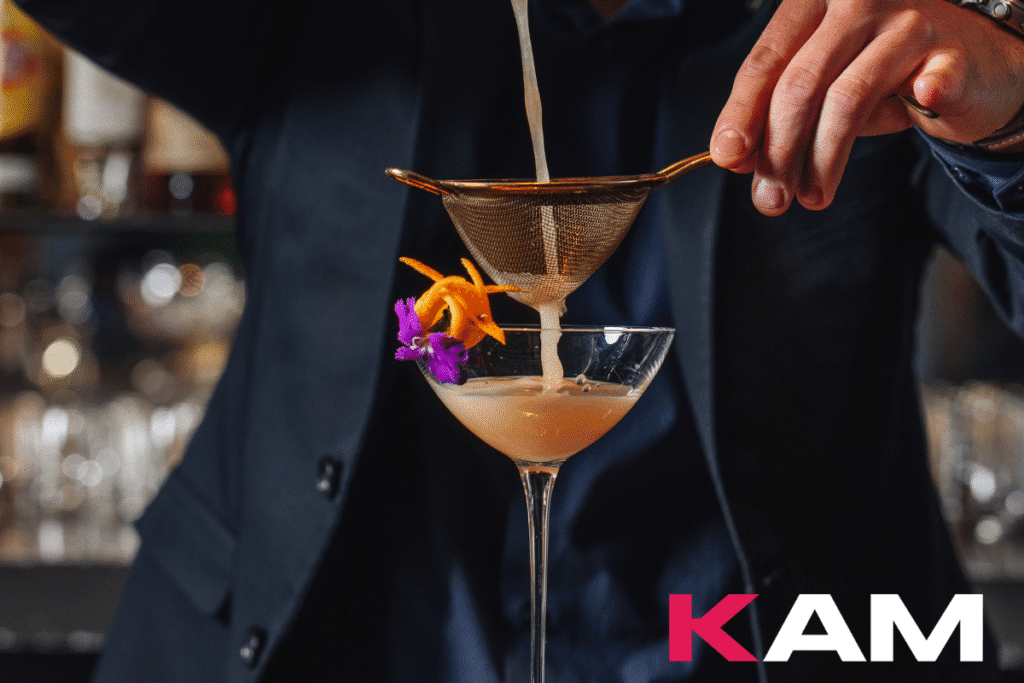
The most successful operators are increasingly treating alcohol-free drinks with the same level of care, theatre and storytelling as alcoholic serves. That means discussing flavour profiles, ingredients and pairings naturally, rather than positioning moderation as a compromise.
Moderation Does Not Mean Fewer Hospitality Occasions
One of the biggest misconceptions around alcohol moderation is that it represents a loss of hospitality occasions.
In reality, most consumers choosing low and no options are still highly engaged in social experiences.
Consumers continue to visit pubs, bars and restaurants for atmosphere, connection, ritual and shared experiences. What is changing is not necessarily whether people go out, but what they choose to drink while they are there.
This is particularly visible among younger consumers and health-conscious drinkers, where moderation is increasingly viewed as part of a balanced lifestyle rather than abstinence.
As a result, mixed drinking occasions are becoming more common, with alcohol-free drinks sitting comfortably alongside alcoholic serves within the same group.
Alcohol-Free Drinks Are Becoming More Premium
Another important shift within the low and no market is premiumisation.
Consumers increasingly expect alcohol-free drinks to deliver:
- complexity
- quality ingredients
- visual appeal
- and a genuine sense of occasion
Simple sugary mocktails or basic soft drink alternatives are no longer enough for many consumers.
The growth of premium alcohol-free cocktails and distilled non-alcoholic spirits reflects a broader expectation that moderation should still feel indulgent and considered.
For hospitality businesses, this creates an opportunity not just to meet changing demand, but to elevate spend, differentiation and guest experience within the category.
Hospitality Needs to Catch Up With Consumer Expectations
Consumers have already moved beyond seeing alcohol-free as niche.
Hospitality is now entering the next phase of adaptation: integrating low and no drinks fully into the overall experience.
The venues that stand out will not necessarily be the ones with the largest alcohol-free range. They will be the ones that make moderation feel visible, intentional and fully embedded into the occasion.
That means:
- clear menu positioning
- confident staff recommendations
- premium serves
- strong visibility
- and treating alcohol-free with the same importance as every other drinks category
Because increasingly, guests expect that standard as a given.
The full Raising the Bar 2026 report, produced by KAM in partnership with Everleaf, explores the latest alcohol-free hospitality trends, consumer behaviours and operational opportunities in more detail.
You can also join us at our upcoming Low & No event, where industry experts and operators will discuss the future of moderation, changing drinking habits and what comes next for hospitality.
Interested in understanding your category, consumers, customers or employees a little better? Take a look at other work we’ve done and get in touch to see how we can help you.
